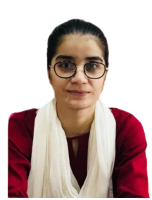
Assistant Professor, Department of Forensic Medicine University of Health Sciences, Lahore
5 years of experience
I am a technically proficient professional with extensive experience in operating, maintaining, troubleshooting, and providing training on a range of advanced scientific instruments used in materials science, nanotechnology, and analytical research. My expertise includes the use of high-precision equipment such as Potentiostat/Galvanostat (PGSTAT), Quartz Crystal Microbalance (QCM), LCR meters, Atomic Force Microscope (AFM), Scanning Electron Microscope (SEM), Transmission Electron Microscope (TEM), X-Ray Diffraction (XRD), and Fourier Transform Infrared Spectroscopy (FTIR).
My work primarily involves ensuring the smooth, reliable, and efficient operation of these instruments in a research and laboratory setting. I have developed a deep understanding of electrochemical workstations (e.g., PGSTAT), using them extensively for corrosion studies, cyclic voltammetry, and material characterization. I regularly calibrate the systems, monitor their performance, and assist researchers in setting up their experiments and interpreting results.
With QCM systems, I specialize in conducting real-time mass change measurements at the nanogram level, which is crucial for thin-film studies and sensor development. I am equally skilled in using LCR meters to assess the electrical characteristics of materials, ensuring accuracy through routine maintenance and verification protocols.
In the field of microscopy and imaging, I have worked extensively with AFM for surface topography analysis at the nanoscale. I assist users in setting parameters, preparing samples, and interpreting high-resolution images. My experience with SEM and TEM includes working alongside trained operators and scientists to facilitate routine usage, perform system checks, and troubleshoot issues such as vacuum errors, contrast problems, or software malfunctions.
I also have strong working knowledge of XRD systems for phase identification and crystallinity analysis. I support users in data acquisition, ensure proper alignment, and perform basic maintenance tasks like filament checks and detector cleaning. Additionally, I operate FTIR spectrometers for identifying chemical bonds and functional groups in various materials, handling background corrections, and maintaining clean optics for accurate spectra.
Beyond instrument operation and care, I place a strong emphasis on user support and training. I have conducted numerous one-on-one and group training sessions for students, researchers, and new lab members, focusing on correct operation, data interpretation, and common troubleshooting steps. I have authored user-friendly guides and SOPs that help standardize usage across research teams, reducing the risk of damage and improving data consistency.
I also collaborate with technical support teams and vendors when deeper-level service is required, facilitating smooth communication between users and service engineers. I track instrument performance logs and schedule preventive maintenance to ensure equipment reliability.
While I do not specialize in equipment installation, my strengths lie in hands-on operation, day-to-day care, and in-depth user support. I am committed to fostering a safe, efficient, and well-supported laboratory environment where researchers can fully utilize advanced instrumentation for high-quality results.
I specialize in operating and maintaining advanced equipment commonly used in industrial, scientific, and medical research settings. My expertise includes:
PGSTAT (Potentiostat/Galvanostat systems): Skilled in electrochemical analysis for materials characterization and corrosion studies.
QCM (Quartz Crystal Microbalance): Experienced in monitoring nanoscale mass changes in thin film deposition and sensor development.
LCR Meter: Proficient in measuring inductance (L), capacitance (C), and resistance (R) for materials and electronic components testing.
AFM (Atomic Force Microscope): Expertise in nanoscale surface characterization, topography, and force measurements.
SEM (Scanning Electron Microscope): Skilled in imaging and analyzing surface morphology at high resolution.
TEM (Transmission Electron Microscope): Experience in examining internal microstructures and crystallography at atomic resolution.
XRD (X-Ray Diffraction): Proficient in phase identification, crystallinity analysis, and structural characterization of materials.
FTIR (Fourier Transform Infrared Spectroscopy): Knowledgeable in identifying organic/inorganic compounds through functional group analysis.
These instruments have been integral to my work in material science, nanotechnology, and analytical research environments.
https://scholar.google.com/citations?user=hB4rVUEAAAAJ&hl=en
 Register as an Expert
 LOGIN