
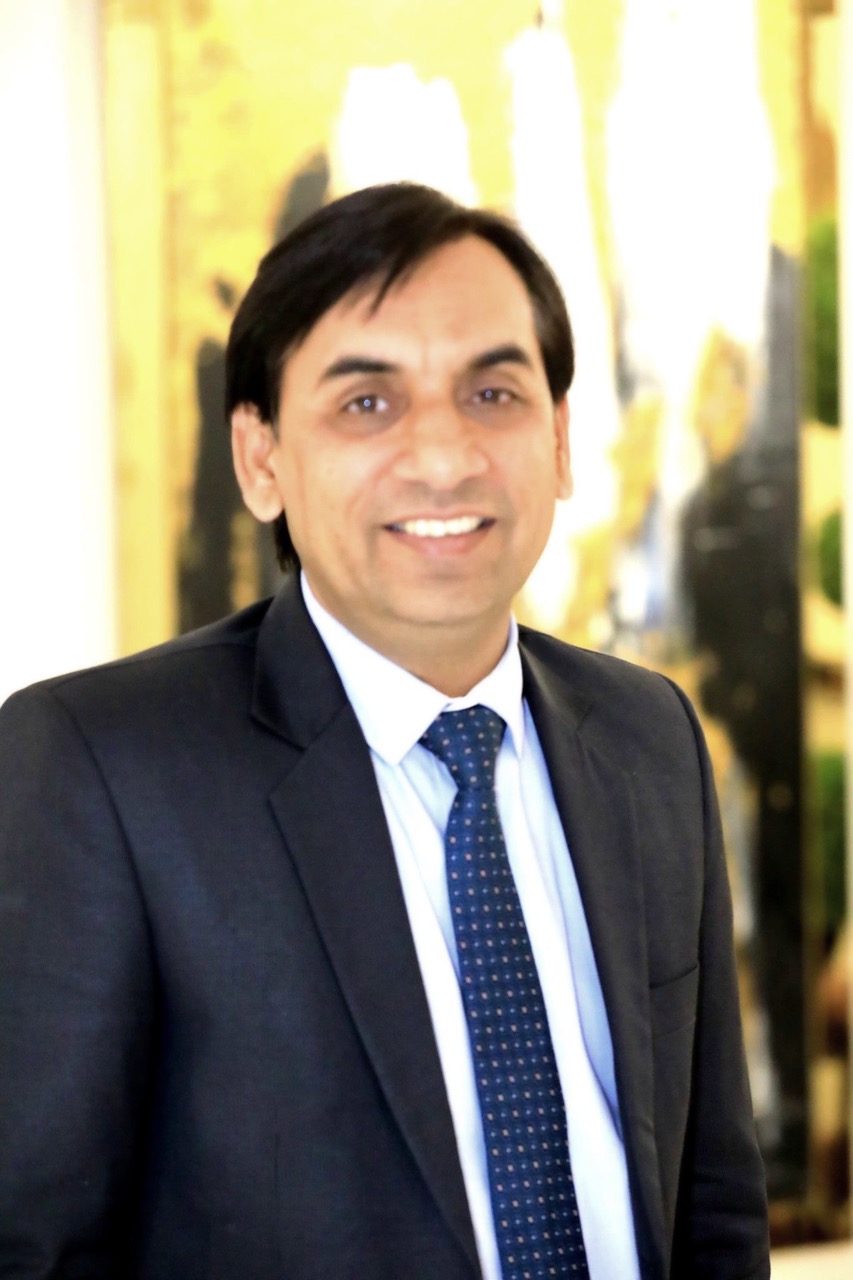
Professor, Quaid-i-Azam University Islamabad
15 years of experience
Dr. Muhammad Imran is Professor of Microbiology and Provost boys hostels. He has thirteen years of experience at Quaid-i-Azam University (QAU) Islamabad Pakistan. He holds his doctorate and Post doctorate from University of Normandy, France. Recently, he worked as visiting scientist at Massachusetts Institute of Technology (MIT) under Fulbright fellow program. His area of expertise is food and nutritional microbiology with special focus on food safety and Nutrition. He has been awarded three national (PSF, HEC)/Industrial) and an international (MIT-USA) grant. He successfully supervised 7 PhDs and 78 M.Phils. He also served as president of Pak-France Alumni Network (PFAN) for two consecutive years. He won the “Innovation Award” from Pakistan Science Foundation (PSF) for his concept of a biotechnology-based solution to reduce Pakistan’s imports. He has fifty three international publications in top journals and participated in writing six books on his subject of expertise. He has been actively contributing to academic development of QAU by introducing new curriculum. He is also participating as member of PSQCA (Member of National Standard Committee (NSC) and various technical committees on food standards), Member DTRC in various universities, member curriculum development committee, member board of study, academic council, and examiner in other universities. He is serving as reviewer of several international journals and editorial board member. He has been actively involved in extracurricular activities throughout his academic and professional career in the form of dramatics, sports and arranging/participating in national and International events/conferences. He is young and energetic and determined to contribute in the academic development of country with full devotion and dedication.
mimran@qau.edu.pk, contact; 90643183/ Mobile: 03465459904
Dr. Muhammad Imran
Professor (Food and Nutrition, Microbiology) &Provost
Quaid-i-Azam University (QAU) Islamabad Pakistan.
With my extensive experience in academia, research, and leadership, I am dedicated to contributing to Pakistan's national economy, higher education, technology, innovation, capacity building, international collaborations, and socioeconomic development. My expertise in food safety and nutritional microbiology, coupled with my biotechnology-based solutions, can help address food security and safety challenges, reduce imports, and boost local agricultural and industrial productivity, thereby strengthening the national economy. In higher education, I can help to modernize curricula, mentor students and researchers, and promote interdisciplinary research to foster innovation and critical thinking. My international exposure, including Fulbright fellowship at MIT and collaborations with global institutions, positions me to facilitate technology transfer, establish research partnerships, and attract funding for cutting-edge projects. I am committed to capacity building by training young scientists, enhancing laboratory infrastructure, and organizing workshops to bridge the skills gap. As an active member of national standard committees and curriculum development bodies, I am committed to ensure that educational and industrial standards align with global benchmarks. Additionally, my involvement in extracurricular activities and international conferences highlights my belief in holistic development, which I aim to promote through initiatives that integrate education, culture, and community engagement. With unwavering dedication, I strive to drive socioeconomic progress, inspire innovation, and position Pakistan as a leader in science, technology, and sustainable development on the global stage.
Dr. Muhammad Imran
Professor (Food and Nutrition, Microbiology) &Provost
Quaid-i-Azam University (QAU) Islamabad Pakistan.
With my expertise in academia, research, and leadership, I aim to contribute to Pakistan's economy, education, technology, innovation, capacity building, international collaborations, and socioeconomic development. My focus on food safety and nutritional microbiology, along with biotechnology-based solutions through synthetic biology can address food safety & security, reduce imports, and enhance local productivity, boosting the economy. In higher education, I can help to modernize curricula, mentor students, and promote interdisciplinary research to foster innovation. My international experience, including Fulbright fellowship at MIT, enables me to facilitate technology transfer, build research partnerships, and secure funding for advanced projects. I am dedicated to capacity building by training young scientists, improving lab infrastructure, and organizing skill-building workshops. As a member of national standard committees, I am keep to align educational and industrial standards in food safety and qulaity with global benchmarks. Through extracurricular and international engagements, I can play role in holistic development, integrating education, culture, and community. Its much need to strive to drive progress, inspire innovation, and position Pakistan as a global leader in science, technology, and sustainable development.
Dr. Muhammad Imran
Professor (Food and Nutrition, Microbiology) &Provost
Quaid-i-Azam University (QAU) Islamabad Pakistan.
Dr. Muhammad Imran’s research laboratory focuses on food and nutritional microbiology, with a special emphasis on chronic diseases, food safety, probiotics, and biotechnology-based solutions to address critical challenges in agriculture, health, and industry. His work has led to the development of innovative probiotic strains, biosensors for detecting food contaminants like aflatoxins, and microbial-based feed supplements that enhance livestock productivity and health. These advancements have significant socioeconomic impacts, including reducing Pakistan’s reliance on imports, improving food security, and boosting the agricultural and dairy sectors. His research on indigenous lactic acid bacteria and fermented foods has not only contributed to scientific knowledge but also provided practical solutions for improving nutrition and public health.
Dr. Imran’s laboratory has successfully secured national and international grants, including projects funded by the Pakistan Science Foundation (PSF), Higher Education Commission (HEC), and collaborations with MIT under the Fulbright program. His work on the Global Microbiome Conservancy highlights his commitment to preserving microbial diversity and understanding its role in health and disease. By mentoring over 7 PhDs and 76 M.Phil students, he has built a strong research community, fostering innovation and capacity building in Pakistan. His contributions to curriculum development, national food standards, and international publications have elevated the academic and research standards of Quaid-i-Azam University (QAU) and beyond. Through his research, Dr. Imran has not only advanced scientific knowledge but also created tangible socioeconomic benefits, such as biotechnology-based solutions for import reduction, improved livestock health, and enhanced food safety standards. His work continues to inspire innovation, promote sustainable development, and contribute to Pakistan’s progress in science, technology, and agriculture.
Industrial / Food & Biotechnology Equipment
Pilot-scale food processing units: bakery, dairy, and beverage processing systems (at University of Arid Agriculture & Coca-Cola International, Islamabad).
Fermentation systems: microbial fermentation for probiotics, sourdough, cheese, and feed supplements.
Infrared (FTIR, NIR) and spectrophotometric systems: for aflatoxin and food quality analysis.
Nd:YAG Laser systems: for microbial inactivation on food packaging and milk.
Scientific / Analytical Equipment
Proteomics platforms:
2D-DIGE (Two-dimensional Difference Gel Electrophoresis, GE Healthcare)
General proteomics and mass-spectrometry–linked platforms (Paris, Rouen training).
Genomics platforms:
Next-Generation Sequencing (Illumina-based platforms via NCBI submissions).
Microbial metagenomics pipelines (QIIME 2 bioinformatics platform).
Microbial identification systems: culture-dependent and molecular methods (PCR, sequencing).
Biosensor design and evaluation: rapid aflatoxin detection.
Medical / Microbiological Laboratory Equipment
Microbial culture systems: anaerobic/aerobic incubators, fermenters, biosafety cabinets.
Electrophoresis equipment: SDS-PAGE, gel documentation.
Microscopy: light microscopy, microbial morphology studies.
Cell culture systems: Caco-2 monolayer assays (toxicity and probiotic studies).
Quality Control / Safety & Standards Equipment
Food quality and safety testing instruments (PCSIR & PSQCA collaborations).
Hazard analysis and microbial biobanking standards (ISO TC34/SC9).
https://www.qau.edu.pk/profile.php?id=805017
 Register as an Expert
 LOGIN